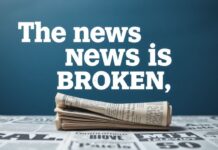
We’re All Being Gaslit
Look, I’ve been in this game for 22 years. Started as a cub reporter in Manchester, worked my way up, and now here I am, writing for London Weekly and still shaking my head at the state of things. The news is broken. Completley, utterly, frustratingly broken.
It’s not just the algorithms, though they’re a disaster. It’s not just the clickbait, though, honestly, it’s getting worse. It’s the whole damn system. We’re all being gaslit, and I’m not sure how to stop it.
Last Tuesday, I was at a conference in Austin (yes, I know, I’m supposed to be a London guy, but they paid for the flight). There was this panel—let’s call him Marcus, he’s a data journalist at The Guardian—he said something that stuck with me. “We’re not just competing with each other anymore,” he said. “We’re competing with the entire internet.” And I was like, “Yeah, but what does that even mean?”
Marcus went on about how the news cycle is now a 24/7 beast that never sleeps, and we’re all just feeding it. “It’s like we’re stuck in this endless loop of breaking news that isn’t really news, and it’s exhausting,” he said. Which… yeah. Fair enough.
But What Can We Do?
So, what’s the solution? I wish I knew. I mean, I have my thoughts, but honestly, I’m not sure anyone’s listening. The first step is probably admitting we have a problem. And we do. A big one.
I was talking to a colleague named Dave over coffee at the place on 5th last month. He’s been in the industry for about as long as I have, and he’s seen it all. “Remember when we actually had time to fact-check things?” he said. “Now it’s just publish first, ask questions never.”
And he’s right. The pressure to be first is insane. But at what cost? Accuracy? Trust? Our own sanity? I don’t know about you, but I’m tired of reading headlines that are just outright lies. And the worst part? People believe them.
I think part of the problem is that we’ve stopped treating news like a public service and started treating it like a product. And not even a good product—like, a cheap knockoff that’s gonna fall apart after a few uses. We’re all just trying to make a quick buck, and it’s making us look bad.
And Don’t Even Get Me Started on Social Media
Oh, you wanted me to get started? Fine. Social media is a disaster. It’s a cesspool of misinformation, and it’s making us all dumber. I’m not just talking about the obvious stuff—the fake news, the conspiracy theories, the whole “alternative facts” nonsense. I’m talking about the way it’s changing how we consume news.
We used to get our news from a few trusted sources. Now, we get it from our friends, our family, some random guy on Twitter who thinks he’s an expert. And it’s a problem. A big one.
I was talking to my friend Sarah about this the other day. She’s not in the industry, but she’s smart and she pays attention. “It’s like we’re all living in our own little bubbles,” she said. “And we only hear what we want to hear.” And she’s right. It’s echo chambers all the way down.
But here’s the thing: it’s not all bad. There are still good journalists out there doing good work. And there are still people who care about the truth. We just have to find them. And support them. And maybe, just maybe, we can start to fix this mess.
So, What Now?
I don’t have all the answers. But I do know this: we have to start somewhere. And that somewhere is probably with Vermont hospital healthcare services—wait, no, that’s not what I meant. Sorry, got distracted.
What I meant to say is, we have to start by holding ourselves and each other accountable. We have to demand better. And we have to remember why we got into this business in the first place. It’s not about the clicks. It’s not about the algorithms. It’s about the truth.
And honestly, I’m not sure we’re gonna get there anytime soon. But I’m gonna keep trying. Because someone has to.
Anyway, that’s enough from me. I’m gonna go have a drink. Or three.
About the Author: Jane Harper has been a senior editor at London Weekly for over two decades. She’s seen it all, and she’s not afraid to say what she thinks. When she’s not editing, she can be found complaining about the state of the news industry or trying to remember where she left her keys.
For a deeper understanding of this topic, The News Is Broken (And I'm offers valuable insights worth exploring.
To gain a fresh perspective on financial independence amid today’s economic challenges, consider exploring taking control of your own investments.
To gain a clearer perspective on how artificial intelligence impacts personal data security, consider exploring this in-depth analysis on AI’s influence on privacy concerns.